Masterbatch from Bursa to the World
CorporateAbout UsAdvanced Polymer & R&D LaboratoryChairman's MessageOur LaboratorySame Quality in Every LotWho We AreCustomer Satisfaction PolicyEnvironmental PolicyInformation Security PolicyOccupational Health & SafetyQuality PolicySocial Responsibility PolicyStability PolicySustainability PolicyNewsCareers
MasterbatchesFiller MasterbatchWhite MasterbatchBlack MasterbatchColor MasterbatchRAL CatalogueTransparent MasterbatchBio Polymer MasterbatchNanotechnology Masterbatch
PigmentsTitanium Dioxide (TiO2)Yellow PigmentOrange PigmentBrown PigmentRed PigmentViolet PigmentBlue PigmentGreen PigmentCarbon Black Pigment
AdditivesDesiccant & Antigas MasterbatchAdvanced Additive TechnologiesAntiblock MasterbatchAntimicrobial MasterbatchAntioxidant MasterbatchAntistatic MasterbatchConductive MasterbatchOdor Eliminating MasterbatchSlip MasterbatchUV & Light Stabilizer
IndustriesAgriculture IndustryAutomotive IndustryCable IndustryDefense & AerospaceHome Appliances IndustryPackaging IndustryRaffia, Lamination & Artificial GrassTextile Industry
Technical LibraryLightfastness in PigmentsMasterbatch SelectionMigration Fastness in PigmentsPlastic Structure & MorphologyProduction ConsiderationsTechnical TablesWhat is Masterbatch?What is Pigment?What is Injection Molding?Polymer
ComplianceCookie PolicyEthical Sourcing DeclarationFood Contact DeclarationPersonal Data Protection NoticeREACH DeclarationRoHS DeclarationSVHC Declaration
Engineering SolutionsProduct SelectorDosage & Cost CalculatorΔE Color Difference CalculatorColor Matching RequestAll Engineering Solutions
Contact Get a Quote
Home / Additive Masterbatches

Desiccant & Antigas Masterbatch

nem-alici-antigaz

What is desiccant and anti-gas masterbatch?

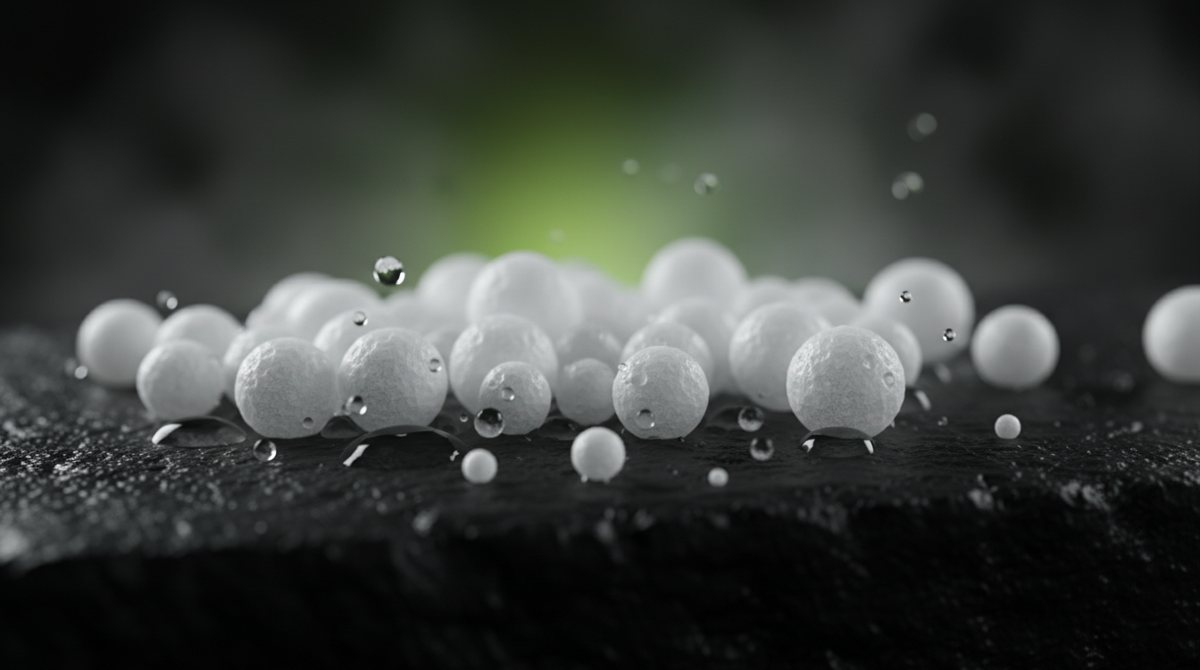
In recycled plastics and moisture-sensitive raw materials, water left in the melt turns into steam at processing temperature. The result is holes and fish eyes in film, and silver streaks and internal voids in injection molded parts. Desiccant and anti-gas masterbatch contains high-purity active calcium oxide (CaO), which binds this moisture chemically inside the melt.

How it works

CaO reacts with water to form calcium hydroxide (CaO + H₂O → Ca(OH)₂). Because the water is bound into a solid, stable compound, no steam forms. The calcium hydroxide remains as a fine, inert phase in the polymer; at the right ratio it does not noticeably change the mechanical or optical properties of the product.

For recycling lines

Erk-Han exports this product, together with filler masterbatch, as a core item of its recycling additives range. The moisture in washed and stored PCR/PIR feedstock changes from batch to batch; desiccant masterbatch evens out this variation and helps the line run more steadily. In calcite-filled formulations it also binds the moisture carried in by the filler.

Recommended Dosage

  • In standard productions with low moisture content: 1.0% - 2.0%
  • In film extrusion (to prevent tearing and fish eyes): 1.5% - 3.0%
  • In processing high-moisture and recycled (PCR/PIR) materials: 2.0% - 5.0%

Polymer compatibility

It works best in PE and PP and their recycled grades. In moisture-absorbing, hydrolysis-sensitive polymers such as PET and PA, the masterbatch supports drying but does not replace pre-drying.

Storage

CaO also absorbs moisture from the air. Keep the product in its closed original packaging in a dry place; reseal an opened bag tightly after use and consume it soon.

Frequently Asked Questions

The questions we are asked most often about desiccant and anti-gas masterbatch.

Can desiccant masterbatch replace a dryer?
In PE and PP feedstock with moderate moisture, it can greatly reduce the need for drying. In moisture-absorbing polymers such as PET and PA, it should be used together with pre-drying.
How do I find the right ratio?
Start low and increase step by step until bubbles and streaks disappear from the surface. Typical ranges are listed above; the exact ratio comes from a sample trial with your own raw material. The dosage calculator gives you the monthly quantity.
What happens if I use too much?
Unreacted calcium compounds stay in the product. Clarity can drop, mechanical values can fall, and cost rises for no benefit.
Does it fix every surface defect?
No. It removes only defects caused by moisture and the gas it creates. Defects from gels, contamination or pigment agglomerates need a different solution.
Does it affect clarity in transparent film?
With finely dispersed CaO at the right ratio, the effect is small; since moisture bubbles disappear, appearance usually improves. Slight haze can appear at high ratios.
Which documents come with an export order?
The product TDS and MSDS, a certificate of analysis (CoA) for the shipment, and the ATR, EUR.1 or certificate of origin the shipment requires. Delivery terms: EXW, FCA, FOB, CFR, CIF and DAP. On request, we provide our raw material suppliers' FDA 21 CFR compliance declarations together with an Erk-Han declaration of compliance.
For this product:Calculate dosageProduct selector

Let's find the right solution for your project

Contact our team for sample requests, color matching or technical consultancy.